
Understanding the PIA Sale Deal in Pakistan
The Pakistan International Airlines sale has been a major topic across business circles and social conversations. Many people have heard that the government received only a small amount of money from the sale. Others believe it is a huge deal that could change the airline’s future. In truth the PIA sale is more complex than a simple cash payment. The government and private partners agreed on a shared solution to restructure the airline and reduce financial burden. The sale brought a mix of immediate funds future investment and long term commitments that will shape the company and the aviation sector.
How Much Money the Government Actually Received
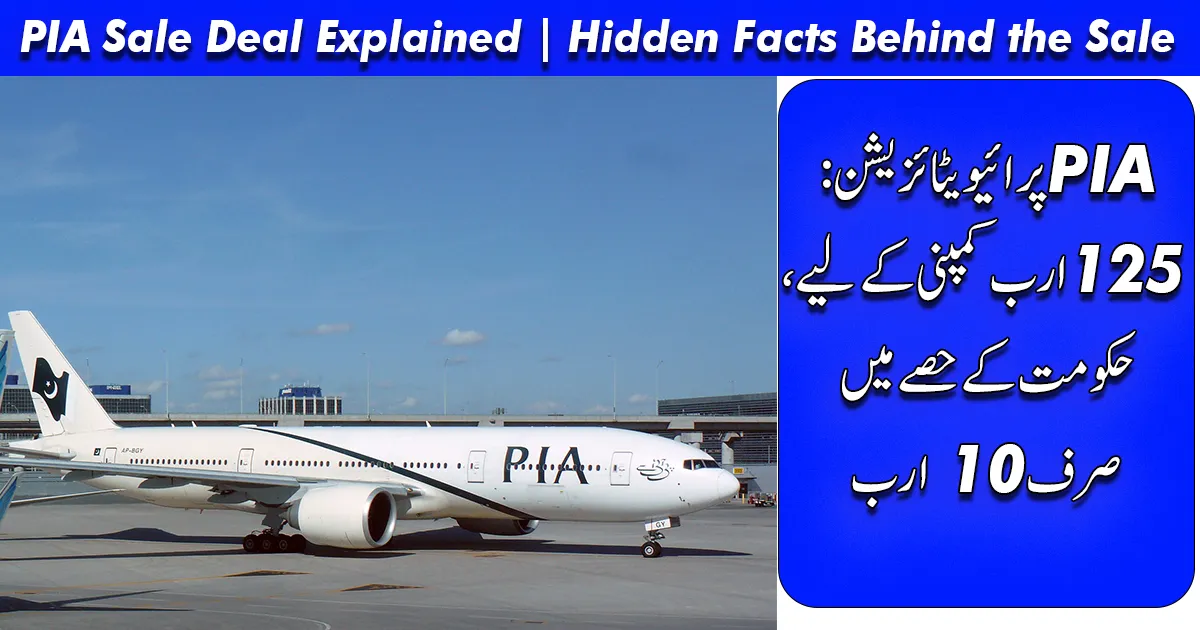
When the PIA sale was finalized the total bid value reported was 135 billion rupees. This value represents the overall deal price offered by the winning consortium. However the government did not receive all of this money as direct cash. Instead only a portion of the total bid is paid upfront and received directly by the government treasury.
The amount that goes directly to the government is around ten billion rupees. This is the actual cash the government received and can use for budget needs. This number surprised many people because they expected the entire sale amount in cash. But that is not how the agreement was structured.
A much larger portion of the sale value is not taken as cash by the government immediately. Instead that portion is used for investment into the airline itself.
What Happens to the Remaining Sale Value
Out of the total 135 billion rupees offered by the consortium the government only took ten billion rupees in cash. The rest will be invested back into PIA to support its financial health and operations.
This remaining amount is nearly 125 billion rupees. Rather than going into the government budget that money will be used by the airline for:
- upgrading aircraft and equipment
- clearing old financial liabilities
- improving infrastructure
- modernizing systems and technology
This type of reinvestment is meant to help the airline become stronger and more efficient over time. The sale was structured this way so that new owners would not simply take cash and leave the airline struggling. Instead they are committing funds directly to improve performance and sustainability.
The Consortium Behind the PIA Sale
The winning bid came from a group of private investors who joined together to form a consortium. A consortium is a group of companies working together on a joint venture. This allows them to pool their financial resources and management capabilities.
In this case the consortium includes large companies with experience in various business sectors. Their combined expertise is expected to help turn around the performance of the airline. Because running a national airline is complicated and expensive the consortium structure shares both risk and reward among partners.
The idea is that with strong leadership and coordinated planning the airline can become competitive again in the regional and global market.
Why the Sale Was Structured This Way
Many people ask why the government did not simply take all 135 billion rupees as cash. The answer is strategic.
The airline had been struggling financially for years and was carrying large losses. By reinvesting most of the sale money directly into the airline the new owners aim to fix core problems. They need to improve operations maintenance and infrastructure before the airline can become profitable.
If the government had taken all the money as cash many of the deep operational issues would have remained unaddressed. The new structure instead tries to make sure the money goes to areas that need repair and modernization first.
What This Means for PIA’s Future
The sale and investment plan are big steps toward stabilizing the airline. With new management oversight and a strong investment plan the airline has a chance to improve flight reliability, passenger experience, and financial strength.
The focus now shifts to execution. The new owners will have to prove that they can deliver operational improvements on time. They will likely focus on reducing losses, modernizing fleets, improving customer service and creating sustainable corporate governance.
If they succeed the airline may return to profitability and regain its position as a strong national carrier.
Public and Expert Reactions
The public reaction has been mixed. Some people are happy that the sale finally happened after years of losses and mismanagement. They see the reinvestment plan as a long term solution rather than a quick fix.
Others worry that the government received too little cash upfront. They feel that selling a major national asset should have brought more direct revenue.
Experts emphasize that judging the sale solely by the upfront cash received misses the larger picture. They argue that a strong airline with better operations will bring more benefits over time, including:
-
better connectivity
-
improved revenue
-
increased national competitiveness
In this sense the value may be realized gradually rather than immediately.
Why Many People Believe the Deal Is Not Worth It
Many observers believe the PIA sale does not reflect the true value of the airline. They say PIA Sold at Cheap while Pia assets worth billion. They argue that the government received only a small amount compared to the assets and brand name that were transferred. The airline owns valuable landing slots aircraft parts real estate and technical facilities. Selling control for a limited upfront payment creates the feeling that the public asset was undervalued. Critics say the buyers gained long term benefits while the government accepted a short term solution. They worry that future profits will go to private owners while the country gave away a national asset for less than it was really worth.
In Summary
The PIA sale was a complex deal that brought both cash and commitment. The government received around ten billion rupees in direct payment and agreed that the rest of the bid amount would be invested directly in the airline.
This structure aims to solve long standing financial and operational challenges. The consortium taking over has a major task ahead to improve systems and restore efficiency. What matters now is how the reinvestment is used and whether the airline can rise again.
The outcome of this deal will affect not just the company but the aviation sector and the national economy in the years to come.



Imagine a world where every flight on Pakistan International Airlines (PIA) was powered by renewable energy. What if we could harness solar power using Nihon Solar Inverters to fuel the airline’s fleet? Could this be a game-changer for both PIA’s operational costs and carbon footprint? Let’s dive into the details and discuss the feasibility of such a project. (Bonus: Explore potential partnerships with local gold and silver industries for funding.)